Both are popular low-impact practices, but they come from different traditions and emphasize different things. Here's how yoga and Pilates compare, and how to choose between them.
Yoga and Pilates are often grouped together as mindful, low-impact practices, but they have different origins, structures, and areas of focus.
An ancient practice combining postures, breathing, and mindfulness, often rooted in spiritual and philosophical tradition.
A more modern practice focused on core strength, controlled movement, and postural alignment through precise exercises.
Both emphasize mindful movement, breath awareness, and can be adapted for a wide range of fitness levels.
Understanding where each practice comes from can help explain why they feel and flow so differently.
Yoga originated thousands of years ago as part of a broader spiritual and philosophical tradition, with physical postures being just one component alongside breathing practices, meditation, and ethical principles.
Pilates, in contrast, was developed in the early 20th century as a system of controlled exercises designed to build core strength, improve posture, and support physical rehabilitation. It is primarily a movement-based practice rather than a spiritual one.
These different origins shape how each practice is typically taught today, even though both have evolved and adapted significantly over time.
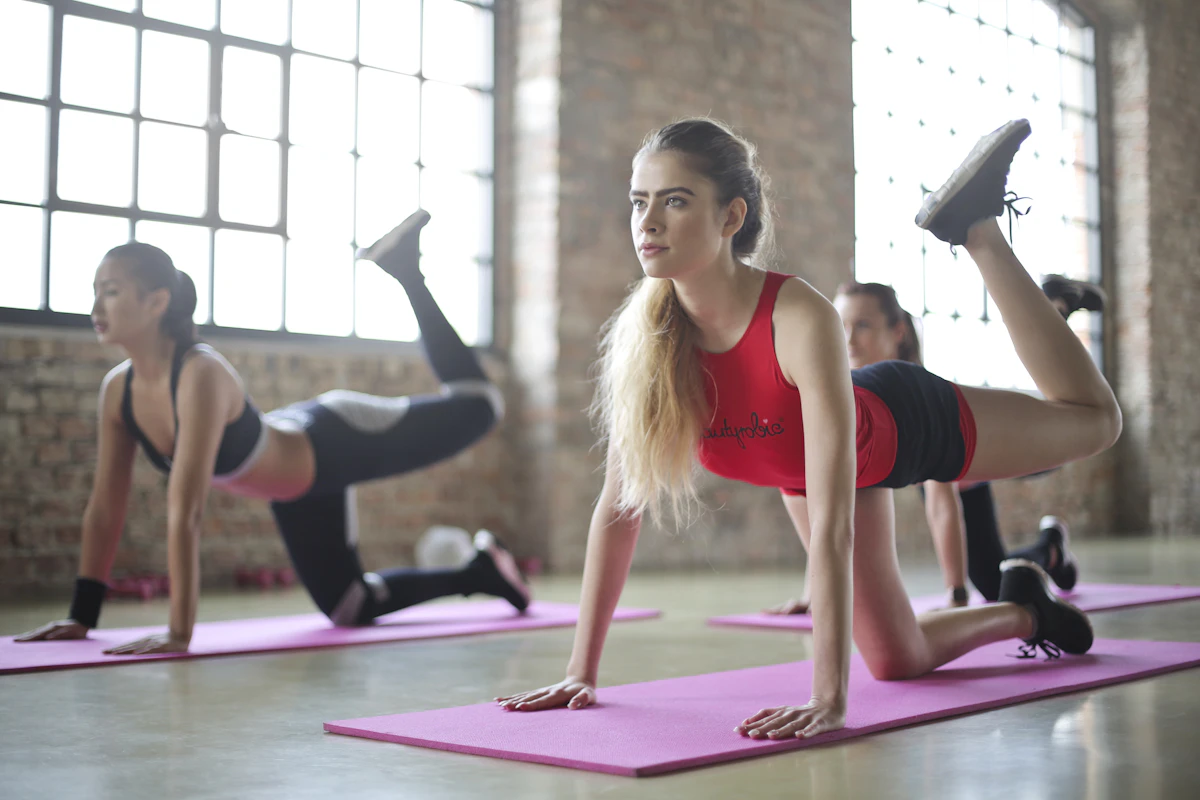
While both involve mindful movement, yoga and Pilates differ in pace, focus, and structure.
Yoga often flows through a variety of poses at different paces, while Pilates uses controlled, repeated movements with precise form.
Yoga emphasizes flexibility, balance, and mindfulness, while Pilates emphasizes core strength and postural control.
Yoga breathing often sets the rhythm of movement, while Pilates breathing supports stability and control during exercises.
Yoga includes many distinct styles and traditions, while Pilates generally follows a more standardized core method.
Yoga commonly incorporates meditation and mindfulness practices, while Pilates primarily focuses on physical movement and body control.
Yoga can often be practiced with minimal equipment, while Pilates may use specialized equipment depending on the style and exercise.
Despite their differences, yoga and Pilates share several meaningful benefits that make both worthwhile practices.
Both practices are low-impact, can be adapted for different fitness levels, and are frequently used to support recovery, mindfulness, and general well-being alongside other forms of exercise.
Because of these overlapping benefits, many practitioners choose to incorporate both yoga and Pilates into their overall fitness routine rather than picking just one.
Your personal goals can help guide whether yoga, Pilates, or a mix of both is the better starting point for you.
You're looking for flexibility, mindfulness, stress management, breathing practices, and a practice with deeper philosophical roots.
You're primarily interested in developing core strength, improving movement control, posture, and overall body awareness.
You want a balanced routine that combines yoga's flexibility and mindfulness with Pilates' controlled strengthening exercises.
Think about your fitness goals, preferred movement style, available time, and whether you enjoy mindfulness or structured physical training.
Choose a practice that fits comfortably into your weekly routine so you can maintain it consistently over time.
Trying both practices can help you understand which movements, pace, and approach best match your personal preferences and goals.
Yoga and Pilates are highly complementary, and many practitioners enjoy incorporating both into their weekly routine.
Rather than viewing yoga and Pilates as competing options, many fitness routines benefit from combining the two. Yoga's flexibility and mindfulness can complement Pilates' core strength and postural focus, creating a more balanced overall practice.
Many studios and instructors also offer blended classes that combine elements of both practices, offering a convenient way to experience the benefits of each.
A few misconceptions often arise when comparing yoga and Pilates. Here's a clearer perspective.
✅ Reality: While similar in some ways, they have different origins, philosophies, and areas of focus.
✅ Reality: Pilates emphasizes focused, controlled movement and breath awareness, which supports mindfulness.
✅ Reality: Many yoga poses build significant strength, particularly in the core, arms, and legs.
✅ Reality: Many practitioners successfully combine both for a well-rounded routine.
✅ Reality: Both practices range from gentle to challenging depending on the style and class.
✅ Reality: The better choice depends on individual goals, whether that's flexibility, strength, or mindfulness.
Find answers to common questions comparing yoga and Pilates.
Yoga combines postures, breathing, and mindfulness rooted in spiritual tradition, while Pilates focuses on structured core-strengthening exercises.
Both are approachable for beginners; the better starting point depends on whether you prioritize flexibility and mindfulness or core strength and posture.
Yes, many people combine both practices for a well-rounded fitness routine.
Yoga generally places a stronger emphasis on flexibility and joint mobility than Pilates.
Pilates is specifically designed around building core strength, though many yoga poses also engage the core significantly.
Pilates focuses on focused, controlled movement rather than formal meditation, though both practices encourage mindfulness.
No, Pilates is a distinct practice with different origins, though it shares some similarities with yoga.
Calorie burn varies by intensity and style in both practices; more active forms of either can offer a solid workout.
Both are commonly used to support back health, though it's best to consult a professional for guidance specific to your condition.
Mat-based Pilates requires minimal equipment, though some studios use specialized equipment like reformers.
Yes, Pilates can often be adapted for older adults, particularly with gentle, mat-based variations.
Yoga has deeper roots in spiritual and philosophical tradition, while Pilates is primarily a physical conditioning practice.
Starting with whichever practice aligns with your primary goal, flexibility and mindfulness or core strength, is a reasonable approach.
Yes, Pilates' focus on core strength can support stability and control in many yoga poses.
You can explore the Yoga Management directory to find wellness centers and studios offering yoga classes.
Explore more comparison guides to understand how yoga stacks up against stretching, walking, and gym workouts.
Yoga vs StretchingWhether you choose yoga, Pilates, or a combination of both, start building a mindful movement routine that fits your goals.
Explore Wellness Resources